A links-influenced layout set between mountains and sea — stunning to look at, demanding to score on, and worth every kilometre of the drive from Da Nang.
At a Glance
| Designer | Sir Nick Faldo (opened 2013) |
| Course Format | 18 holes, Par 71 — 6,961 yards (championship tees) |
| Location | Lang Co Bay, Hue city — ~60–75 min from Da Nang |
| Green Fees | Approx. USD 100–140 (weekday) | USD 130–160 (weekend/peak) |
| Caddies | Mandatory, included in fee |
| Buggy/Cart | Shared buggy ~900,000 VND extra | cart-path-only restrictions apply |
| Best Season | March – August (dry season); October – December (peak season) |
| Difficulty | Challenging — recommended for 24 handicap and below |
| Stay & Play | On-site: Banyan Tree Lang Co, Angsana Lang Co |
There’s a moment on the drive to Laguna Golf Lăng Cô, just after you clear the Hải Vân tunnel and the coastline opens up to the north, when you understand why this place exists. The bay is calm, the mountains stack behind it, and the white beach stretches north toward Hue. It’s remote — deliberately so. The course sits in that gap between the old imperial capital and Da Nang, equidistant from both, accessible to neither without commitment.
That remoteness is part of what makes Laguna special. Sir Nick Faldo’s 26th design project worldwide, and widely considered one of his best, was built on a site that the lead architect Paul Jansen described as feeling ‘undiscovered’ on first inspection. The land — a mix of natural sand dunes, rice paddy fields, streams, and rocky outcrops — gave Faldo extraordinary raw material. What he produced is a course unlike anything else on the central Vietnam coastline: links-influenced in character, strategic in demand, and visually memorable from the first hole to the last.
This review is written for golfers deciding whether the drive is worth it. The short answer is yes — with some honest caveats about what to expect when you get there.
Course Design & Layout
Laguna plays as a traditional out-and-back layout — nine holes away from the clubhouse, nine holes returning. This is a deliberate links design choice, and it means the wind affects the two halves of your round very differently. Play with a south-westerly on the front nine and you’ll be into it coming home, or vice versa. The course reads the conditions, and the conditions change the course.
The terrain is the defining quality here. Faldo and Jansen kept the natural sand dunes intact across much of the site, which gives the holes a raw, rugged character that contrasts sharply with the manicured resort parkland you find elsewhere in Da Nang. Bunkers — and there are many — frame the landing zones without being punitive for punishment’s sake. The rice paddy fields that border holes 3, 4, 13, and 15 are maintained by local farmers and actually harvested seasonally; they’re a genuine piece of the landscape, not decoration.
The greens are the course’s most polarising feature. They are small, tiered, and equipped with sharp ridges that divide the putting surface into specific target quadrants. Miss the right section of the green and you will be chipping from a difficult collection area. On a day when the greens are well-prepared and running at pace, they are a serious test of shot approach and putting. On days when aeration or weather has left them slow or uneven, they become genuinely frustrating — more on that below.
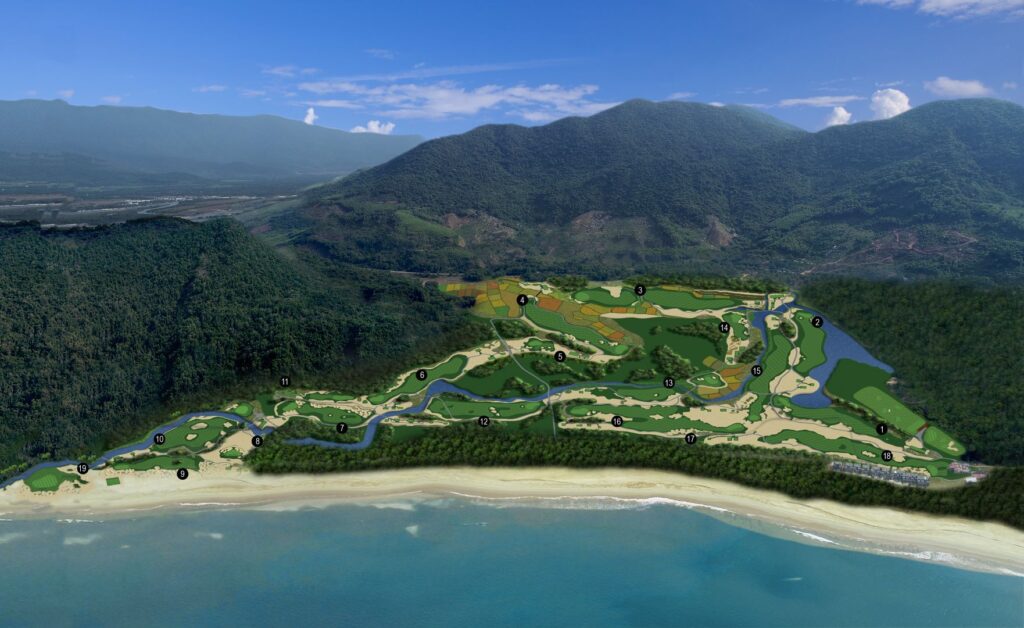
Signature Holes Worth Knowing
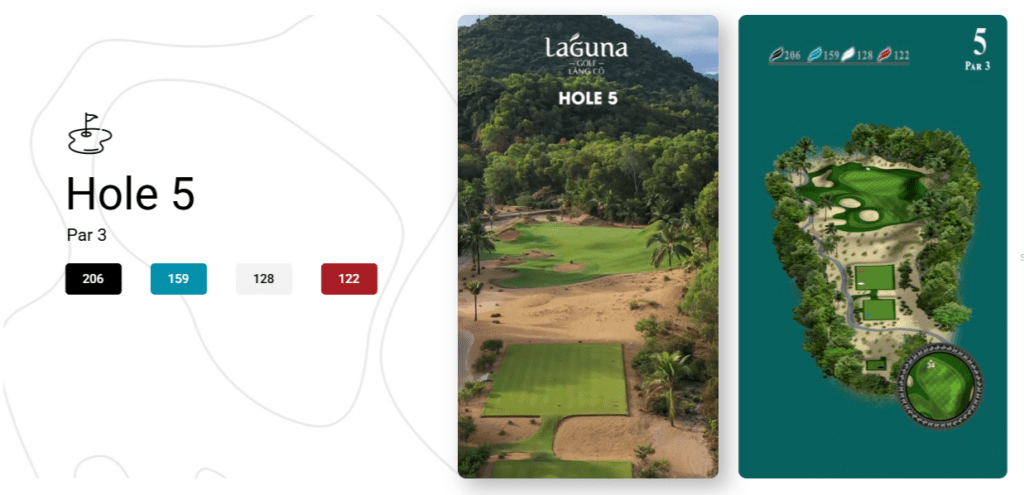
- Hole 5 (Par 3): A demanding par-3 with large protective mounds guarding the green. Club selection is complicated by coastal wind. One of the most photographed holes on the course.
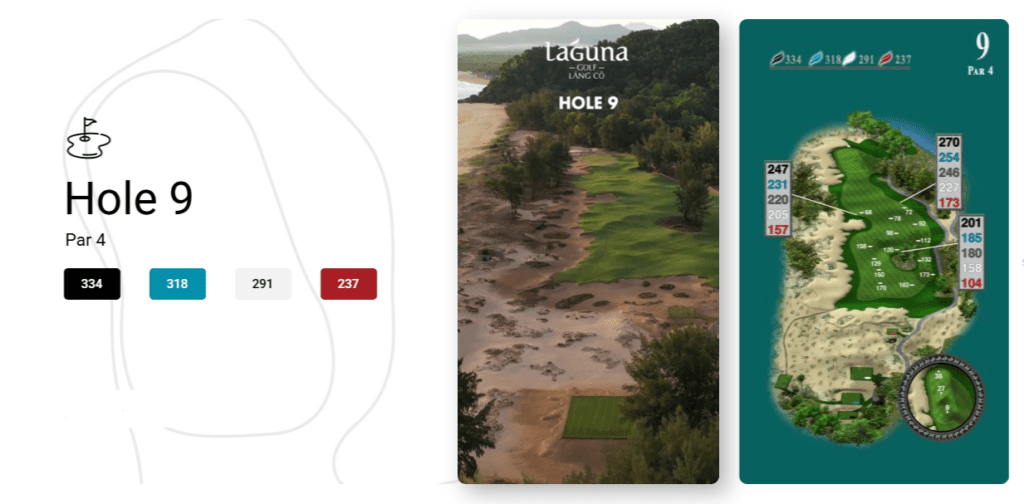
- Hole 9 (Par 5): The coastal highlight — plays alongside the beach with views across the East Sea. Long enough for most amateurs to play as a genuine three-shotter. The scenery at this hole earns the round its money.
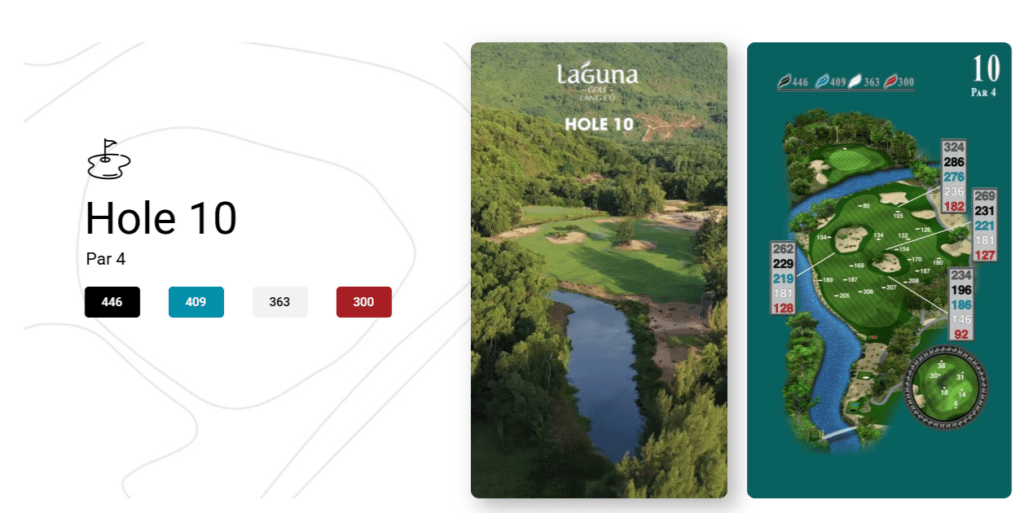
- Hole 10 (Par 5): A multi-route option off the tee that rewards bold play but punishes over-aggression with bunkers and rough. One of the most interesting strategic holes on the course.
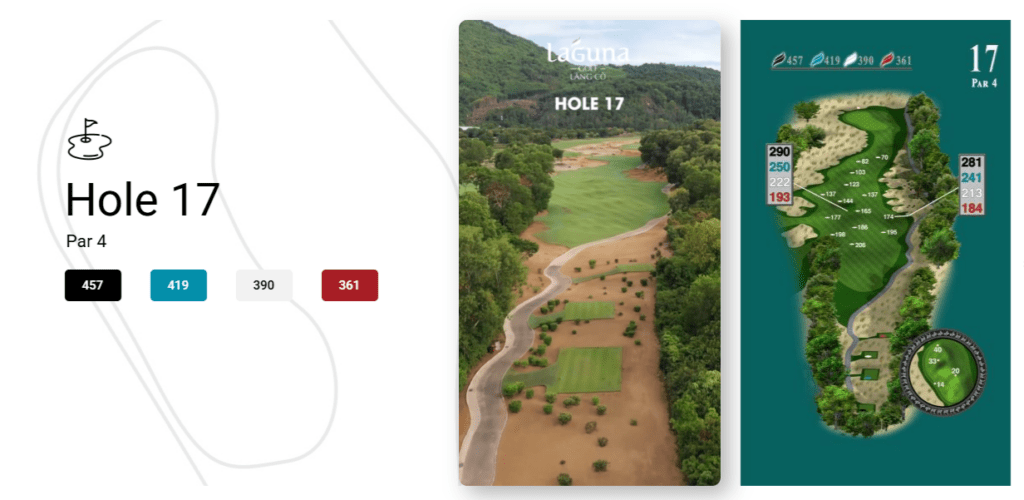
- Hole 17 (Par 5): A long, sandy test that plays as a four-and-a-half par for most amateurs. The OB staking on the right side is tight and catches golfers who bail from the bunkers. Several reviews flag this as the course’s most penalising moment.
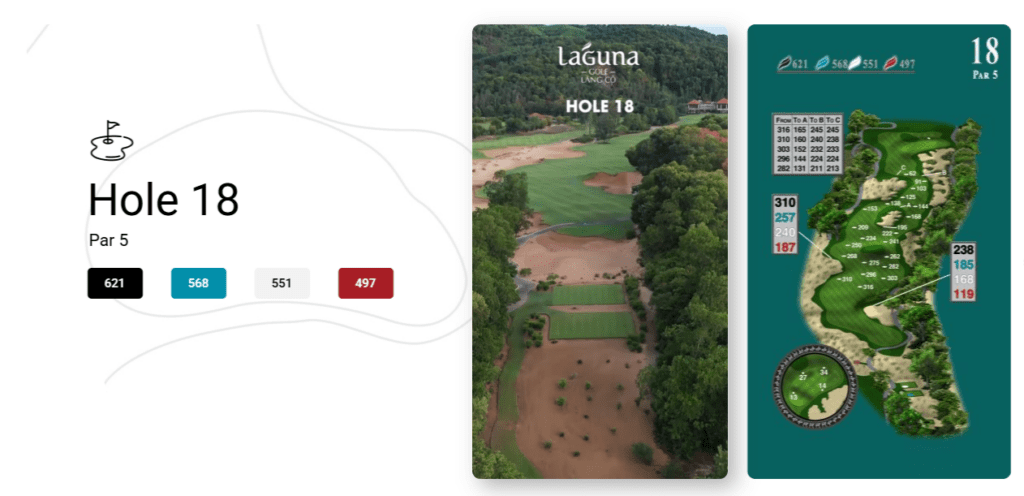
- Hole 18 (Par 5): The finishing hole sits directly beneath the clubhouse with abundant bunkering and a smart green site. Strong ending to the round — the clubhouse terrace audience adds to the atmosphere.
What Real Golfers Say
Across TripAdvisor, GolfAsian, GolfPass, and recent Google reviews, the pattern is consistent. The course design earns near-universal praise. The variables — greens condition, buggy access, and pace of play — determine whether a visitor leaves with four stars or five.
| “My favourite of the 5 courses played. From the moment we stepped into the course, it had a good feeling about it. The layout was interesting with many different challenges.” — GolfAsian visitor, July 2024 ★★★★★ |
| “Wonderful unique course. Possibly my favourite of the trip.” — Nathan H., Google/GolfAsian, October 2024 ★★★★★ |
| “Beautiful design, wonderful caddies, fabulous service — and a smooth pace of play.” — Varun, March 2025 ★★★★★ |
| “A real surprise packet, enjoyed by all. The distance from Da Nang is a downside and the tight OB to the right of 17 and 18 just stuffs up two super holes.” — Henry S., May 2024 ★★★★ |
| “Greens are in terrible condition — compacted and sandy. Caddies were lovely and staff and food in bar was good. Would not play again until greens are fixed.” — TripAdvisor visitor, 2024 |
The greens feedback is a recurring theme and needs an honest mention. Laguna’s greens use Tiff Eagle grass, which requires periodic aeration (coring and sanding) to stay healthy in the tropical climate. During and after aeration cycles, putting becomes significantly harder — the speed is inconsistent and the surface unreliable. The club manager has noted that heavy rainfall (over a metre in December alone) also affects fairway conditions. If you book during or just after typhoon season, lower your conditioning expectations accordingly.
The buggy restriction is another known friction point. During wet conditions or after heavy rain, carts are restricted to paths only — adding considerable walking back-and-forth to what is already a sizeable layout. Several visitors flagged this wasn’t communicated at booking and felt it materially affected their experience. Check with the course before you arrive.
Facilities & Clubhouse
The Laguna clubhouse is one of the best on the central coast — and multiple reviewers say it’s one of the best they’ve encountered on any trip through Asia. The changing rooms are spacious, the locker facilities excellent, and the Golf Café overlooking the 18th is a genuinely pleasant place to debrief after the round. The pro shop is modest in size but stocks quality rental equipment.
Practice facilities are strong: grass driving range, chipping green, putting green, and a short game area. The golf academy offers lessons with PGA professionals. For a dedicated improvement day or warm-up session before a competitive round, it’s properly equipped.
Who Should Play Laguna — and Who Shouldn’t
Play here if you:
- Have a handicap of 24 or below and enjoy courses that demand shot placement, not just distance.
- Want a round that feels architecturally distinct from the resort parkland courses closer to Da Nang.
- Are staying at Banyan Tree or Angsana Lang Co — the Stay & Play packages represent excellent value and remove the distance issue entirely.
- Appreciate links-style golf: ground game, wind management, strategic bunkering.
Think carefully if you:
- Are a high handicapper who loses multiple balls per round — the bunkers, OB, and small greens will be punishing.
- Have limited time and don’t want a 60–75 minute transfer each way from Da Nang.
- Are booking during October–December — there’s genuine risk of weather disruption and poor course conditions.
- Need guaranteed buggy-on-fairway access — confirm the current policy before booking, especially after rain.
Practical Tips
- Getting there: From Da Nang, budget 60–75 minutes via National Road 1A or the coastal route. If you’re driving yourself, the coastal Hải Vân Pass road (instead of the tunnel) adds 20 minutes but is worth taking at least once — the views are extraordinary. A private car and driver from Da Nang typically costs USD 40–60 for the day.
- Best time to book: March through May for reliable conditions. The course plays fastest and looks its best when the dunes are dry and the wind is consistent from the south.
- Tee time: Book direct through the Laguna website or via your resort concierge. Allow 30 minutes early for check-in, bag drop, and warm-up.
- Caddies: Mostly female, generally course-knowledgeable. English proficiency varies — some reviewers noted limited yardage communication, while others praised their caddie highly. Green-reading advice is generally reliable; rely on it.
- Stay & Play: If you’re playing Laguna, seriously consider staying one or two nights at Angsana Lang Co (the more accessible price point) or Banyan Tree (full luxury). Combined packages are significantly better value than day-trip green fees, and the resort itself — beach, spa, restaurants — is genuinely excellent.
Final Verdict
Laguna Golf Lăng Cô is the most architecturally interesting course on the central Vietnamese coast. Nick Faldo produced something here that the more polished resort layouts in Da Nang don’t have: genuine character. The landscape is used rather than tamed. The holes ask you to think, adapt, and manage rather than simply execute. The setting is spectacular.
The caveats are real: the distance from Da Nang matters, the greens are inconsistent, and the remoteness means you’re relying on the resort ecosystem. But for golfers who play at a level where course design and strategic challenge matter, Laguna is essential on any central Vietnam itinerary.
Play it on a dry morning in March or April, stay the night, and take the coastal road back.